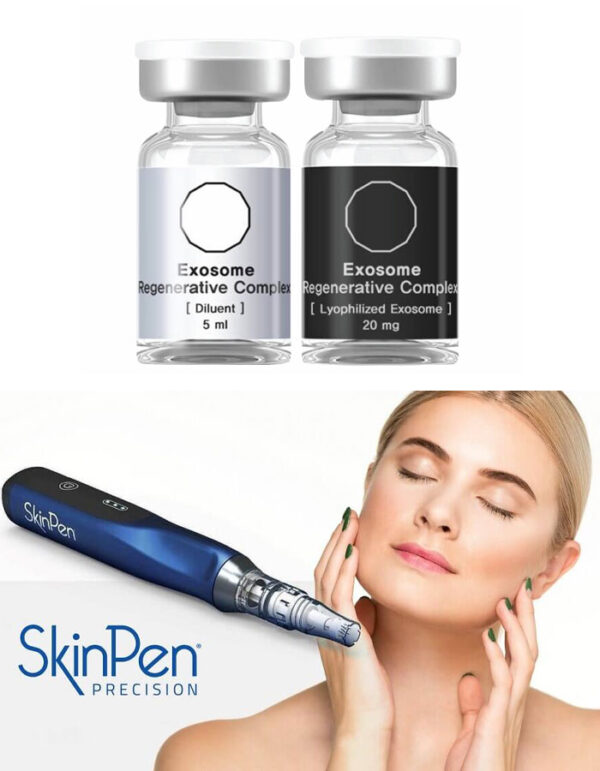
Skinpen Microneedling with Exosomes
Microneedling paired with a topical product marketed as containing exosome-related ingredients, with transparent discussion of evidence and regulatory status.
Are exosome products FDA approved?
Is SkinPen cleared to deliver exosome products?
What should I ask before treatment?
What side effects can occur?
Understanding Microneedling with Exosome Products
This service combines mechanical microneedling with a product marketed as containing exosome-related ingredients. Exosomes are small extracellular particles involved in cell-to-cell signaling, but commercial products vary substantially in source, composition, processing, quality, and evidence.
Important Regulatory Transparency
FDA states that there are currently no FDA-approved exosome products. FDA has also reported serious adverse events associated with unapproved products marketed as containing exosomes.
Separately, FDA states that microneedling devices are not authorized to deliver cosmetics, drugs, biologics, or other products into the skin. This combination should not be presented as an FDA-approved exosome treatment.
Questions to Discuss Before Booking
Ask for the exact product name, manufacturer, ingredients, source, handling requirements, intended use, evidence, regulatory status, and possible adverse reactions. Ask how the product is used relative to the microneedling procedure and what alternatives are available.
Microneedling itself can cause redness, swelling, bleeding, dryness, peeling, infection, pigment change, cold-sore reactivation, scarring, or an unsatisfactory result. Applying an additional product introduces separate risks and uncertainties.
Candidacy and Informed Decision-Making
Active infection, immune suppression, bleeding risk, uncontrolled diabetes, pregnancy or breastfeeding, recent isotretinoin, keloid tendency, allergies, and skin disease require review. Patients should not rely on claims that an exosome product can prevent, treat, or cure disease.
Consultation at SkinHealth
SkinHealth should identify the exact product and explain its role, evidence, alternatives, and regulatory status before consent.
This information is educational. No exosome product is currently FDA approved.